
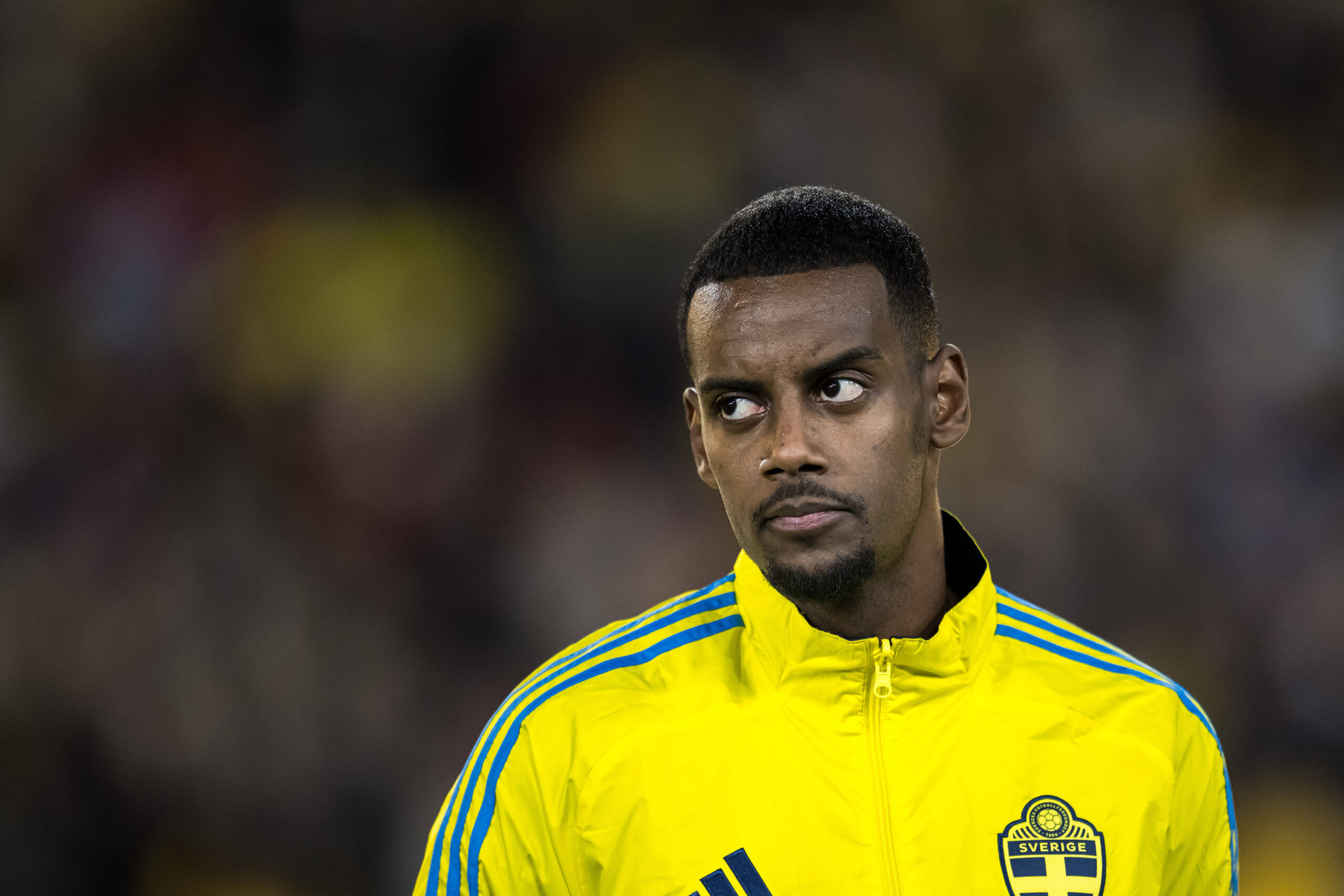
251013 Alexander Isak of Sweden ahead of the FIFA World Cup, WM, Weltmeisterschaft, Fussball Qualifier football match between Sweden and Kosovo on October 13, 2025 in Gothenburg. Photo: Joel Marklund / BILDBYRAN / kod JM / JM0741 bbeng fotboll football soccer fotball vm-kval kval fifa world cup qualifier qualifier qualification sverige sweden sverige a kosovo *** 251013 Alexander Isak of Sweden ahead of the FIFA World Cup Qualifier football match between Sweden and Kosovo on October 13, 2025 in Gothenburg Photo Joel Marklund BILDBYRAN kod JM JM0741 bbeng fotboll football soccer fotball vm kval kval fifa world cup qualifier qualifier qualification sverige sweden sverige a kosovo PUBLICATIONxNOTxINxSWExNORxFINxDEN Copyright: JOELxMARKLUND BB251013JM181
The World Cup arrives every four years, and no matter what football’s administrators do to tweak it, the greatest show on earth still feels like a familiar comfort blanket.
Fans want the shock troops and dark horses, they want the best players turning it on when it matters, and the English getting their hopes up before going out on penalties.
But something happens during this competition every single time, something that reshapes the entire sport in ways nobody fully appreciates until much later.
Four years ago in Qatar, nobody could believe matches were running past 100 minutes as stoppage time went completely berserk during that first week.
Now, games ticking over to 97, 98 or even past 100 minutes is practically the accepted norm across football worldwide.
Four years before that, in Russia, VAR opened its pandora’s box and made its first major move onto the global stage, and now it is firmly in with the bricks.
The same pattern runs through every competition, whether through rule changes, tactics, goal celebrations, the back pass rule, or the number of substitutions permitted.
This time around, VAR is getting an expanded role, with the technology able to review second yellow card offences and get involved in sorting out corner kick decisions over in the United States.
Referees may instinctively reach for the red card and then wait for video review teams to overturn the decision, rather than holding back in the moment.
There are also new measures around substitution timings, goal kicks, and throw-ins, with players having just 10 seconds to leave the pitch or their team must wait a minute or until the next stoppage.
A notable incident saw Iceland dither during their warm-up game against Japan, leaving themselves temporarily with 10 men and conceding a goal as a direct result.
Taking more than five seconds over a goal kick will hand the opposition a corner, with a similar rule applying to throw-ins under the updated guidelines.
Sometimes FIFA introduce these measures as a quiet warning without enforcing them strictly, but the potential for early tournament mayhem is very real regardless.
The knock-on effect for Scottish football is worth considering carefully, given that VAR officials north of the border did not exactly have a smooth season just passed.
More rule complexity handed to the SPFL’s VAR setup is the last thing Scottish fans need, particularly given the volume of conspiracy theories that already follow every controversial decision.
The nightmare scenario is not hard to picture: a team reduced to 10 men with a substitute stuck on the touchline, a corner awarded because a goalkeeper held the ball for 5.1 seconds, VAR intervening for a penalty when the substitute collides with an opponent, all while the clock reads 118 minutes and the last bus home has long since departed.
This World Cup promises to be a genuine spectacle, but Scottish football should brace itself for the aftershocks heading its way before the next domestic season begins.
About the Author
