
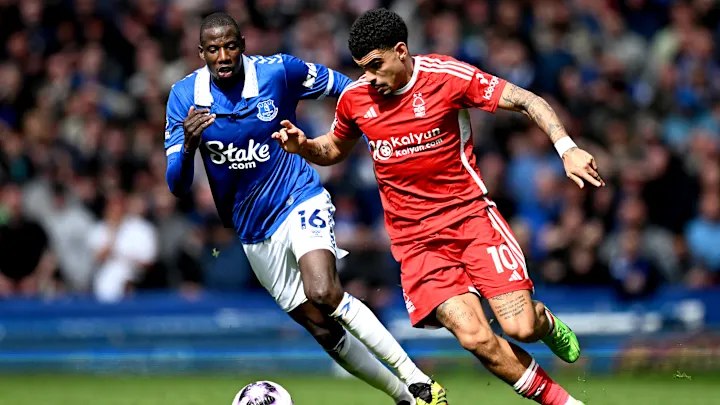
Everton and Nottingham Forest are two of English football’s most historic clubs, each carrying a legacy shaped by domestic success, European nights, and decades of top-flight football.
Although not traditional rivals, their meetings have often reflected wider shifts in English football, from dominance in the late 20th century to modern battles for Premier League stability.
Across generations, Everton vs Nottingham Forest has been a fixture defined by contrasting styles, changing fortunes, and periods where both clubs represented the elite of the game.
Early Timeline And Pre-War Years
Everton and Nottingham Forest first faced each other in league competition in the early decades of the 20th century.
At the time, Everton were already an established powerhouse, having won multiple league titles and FA Cups before the First World War.
Forest, meanwhile, were a competitive but inconsistent top-flight side, alternating between strong cup runs and league survival campaigns.
Matches in this era were often tight and physical, played on heavy pitches with a focus on direct football and territorial battles.
Home advantage was crucial, with Goodison Park frequently proving difficult for visiting Forest sides.
Post-War Football And Forest’s Rise
Following the Second World War, Everton maintained their reputation as a top-division mainstay, while Nottingham Forest experienced fluctuating fortunes.
The dynamic between the two clubs shifted dramatically in the late 1970s under the leadership of Brian Clough.
Forest’s remarkable rise saw them win the First Division title and back-to-back European Cups, elevating them to global prominence.
During this period, meetings with Everton carried added significance, as both clubs were competing near the top of the domestic table.
Forest’s disciplined structure often clashed with Everton’s traditional wing play and physical presence.
Key Themes From The 1970s And Early 1980s:
- Nottingham Forest emerged as a European force
- Everton remained consistently competitive domestically
- Fixtures gained importance due to title contention
- Tactical discipline vs physical intensity became a defining contrast
The 1980s And Everton’s Golden Era
The mid-to-late 1980s marked Everton’s most successful modern era.
Under Howard Kendall, the club won league titles, FA Cups, and the European Cup Winners’ Cup, establishing themselves as England’s dominant side.
Forest, while no longer European champions, remained competitive and difficult opponents.
Matches during this period were often high quality, featuring international players and strong tactical battles in midfield.
Although Everton frequently had the upper hand, Forest’s experience and organisation ensured contests were rarely one-sided.
Decline, Relegations, And Fewer Meetings
The 1990s saw both clubs begin to lose their foothold among England’s elite.
Everton managed to remain largely in the Premier League era’s top flight, albeit often battling relegation.
Nottingham Forest, by contrast, experienced relegations and extended spells outside the Premier League, reducing the frequency of meetings.
When the sides did meet, usually during Forest’s brief Premier League returns, the fixtures carried a sense of nostalgia rather than title significance.
The competitive edge remained, but the stakes had shifted from trophies to survival and rebuilding.
Renewed Encounters In The Modern Era
Forest’s return to the Premier League in the 2020s reignited regular meetings with Everton.
These fixtures reflected modern football realities, with both clubs navigating financial constraints, squad rebuilds, and intense relegation battles.
Games became tighter, more cautious, and heavily influenced by tactical discipline and individual moments rather than sustained dominance.
Goodison Park continued to provide Everton with an emotional edge, while Forest often relied on counter-attacks and defensive organisation.
Historical Head-To-Head Overview
Across all competitive competitions, Everton and Nottingham Forest have faced each other well over 100 times.
Everton hold a slight advantage in overall wins, largely due to their sustained presence in the top flight during periods when Forest were absent.
Forest’s most successful stretches against Everton came during their late 1970s and early 1980s peak.
Goals scored between the two clubs remain relatively balanced, highlighting the competitive nature of the fixture across generations.
Head-To-Head Snapshot:
- First competitive meetings: early 1900s
- Total matches: well over 100
- Everton wins: marginal overall lead
- Forest strongest era: late 1970s to early 1980s
- Home advantage historically significant for both clubs
2025-26 Premier League Standings Context
In the 2025-26 season, Everton and Nottingham Forest find themselves in contrasting but equally challenging positions in the standings.
Everton sit 12th in the table after 21 matches, having collected 29 points from eight wins, five draws, and eight defeats.
With 23 goals scored and 25 conceded, their goal difference of -2 reflects a side that has remained competitive but inconsistent.
Their recent form — one win, two draws, and two losses in the last five matches — suggests a team still searching for rhythm and stability.
Nottingham Forest, meanwhile, are deeply embroiled in a relegation battle.
They occupy 17th place with 21 points from six wins, three draws, and twelve losses.
Forest have scored just 21 goals while conceding 34, leaving them with a -13 goal difference and little margin for error.
Four defeats in their last five matches underline the pressure mounting as the season progresses.
2025-26 Season Comparison:
- Everton: 12th place, 29 points, -2 goal difference
- Nottingham Forest: 17th place, 21 points, -13 goal difference
- Everton last five: Loss, Draw, Win, Loss, Draw
- Forest last five: Loss, Loss, Loss, Loss, Win
- Goals scored: Everton 23, Forest 21
Tactical And Cultural Significance
Everton vs Nottingham Forest is a fixture shaped more by history than hostility.
For Everton supporters, Forest represent a club with shared memories of European success and traditional English values.
For Forest fans, matches against Everton are reminders of a time when their club stood shoulder-to-shoulder with England’s best.
Modern encounters often reflect survival instincts rather than ambition, but the respect between the two fanbases remains evident.
Each meeting adds another chapter to a long-running story defined by evolution rather than rivalry.
Why The Fixture Still Matters:
- Both clubs are former champions of England
- Shared history of European success
- Regular meetings during key transitional eras
- Modern clashes often carry relegation implications
Everton and Nottingham Forest continue to represent the enduring depth of English football history.
Their meetings connect past glories with present-day challenges, ensuring the fixture retains significance well beyond the league table.
About the Author
