
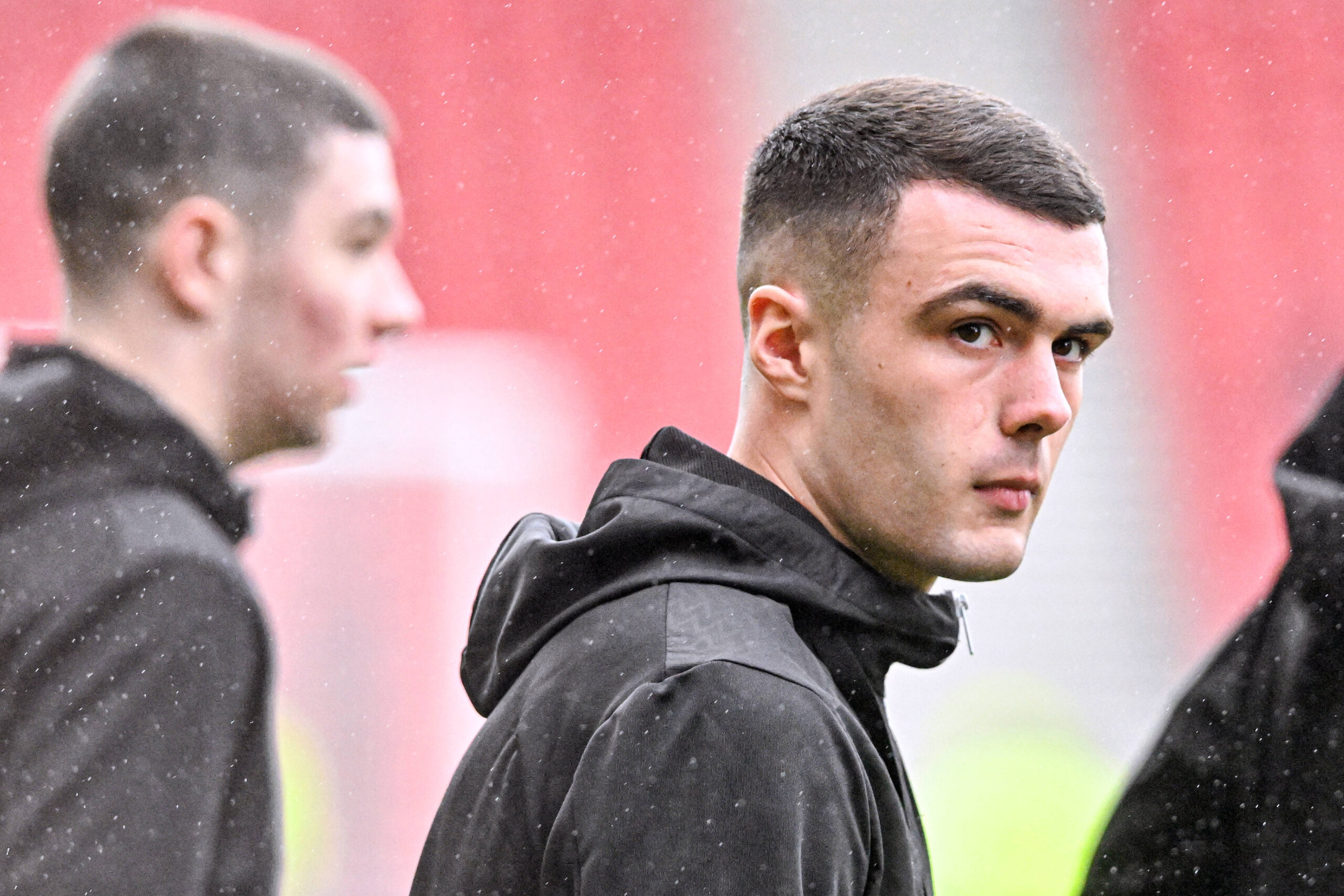
Lennon Miller Source: Imago Images
In Scottish football, timing is everything, and the circumstances surrounding Derek McInnes joining Rangers could hardly have aligned more perfectly for all involved.
Danny Rohl’s departure to RB Salzburg has been widely viewed as a win-win by many Rangers supporters and, crucially, by the Americans now running operations at Ibrox.
Andrew Cavenagh avoids the uncomfortable process of sacking a second manager inside eight months, with Rohl’s popularity having sunk to near-Russell Martin levels among the fanbase.
A substantial compensation package sweetens the deal further, while Rohl gets to return closer to his young family by joining the sister club of his former employers in Leipzig.
Over at Tynecastle, however, there may also be some quiet relief, though Hearts will not forget what McInnes delivered across a remarkable twelve months in Gorgie.
He took the club to within three minutes of what many supporters must have considered an impossible dream, threatening to end a four-decade duopoly on the final day at Parkhead.
Celtic’s late win was heartbreaking for everyone connected to Hearts, but the season-long thrill ride McInnes provided gave supporters genuine reason to believe the extraordinary was within reach.
That the title slipped away at the death does nothing to diminish the quality of the job McInnes did, guiding a club to the brink of toppling Tony Bloom’s challenge of rivalling the Old Firm.
Yet McInnes was not always the most natural fit within the Jamestown model, and he pushed back against certain decisions, most notably insisting on signing Stuart Findlay on a year-long loan from Oxford United despite initial data-driven hesitation.
Having spent two years working with the centre-back at Kilmarnock, McInnes trusted his instincts as a manager over what any laptop analysis could provide, and Findlay went on to form a solid partnership alongside Craig Halkett.
McInnes also insisted on retaining a Scottish core to his squad when Bloom’s recruitment team might have preferred to source players from second division clubs scattered across the globe.
Signings like Claudio Braga and Alexandros Kyziridis added quality, but it was the domestic thread running through the squad that deepened the connection between the team and the Hearts faithful week after week.
With a year into their partnership with the Brighton and Union Saint-Gilloise owner, Jamestown may now prefer a coach more closely aligned with their data-driven philosophy and the high-pressing attacking style seen at both Brighton and USG.
It would have been impossible to move McInnes on while he remained so popular, so the turn of events that led him toward Ibrox has perhaps worked out conveniently for all parties across the city divide.
At Rangers, Cavenagh has learned some painful lessons since arriving, with the appointments of both Martin and Rohl revealing a misunderstanding of what wearing a blue jersey in Glasgow truly demands.
The weight of expectation at Ibrox is unlike anything found at most other clubs, and it was clear that consideration had not been fully made when Martin was appointed, an oversight that unravelled within weeks.
Rohl’s experience under Hansi Flick at Bayern Munich suggested an understanding of pressure, but keeping a winning machine running proved a very different challenge from rescuing a club in freefall.
His team crumbled hopelessly in the final weeks of the season, and the supporters reached a conclusion from which they could not be shifted, leaving the Americans with little choice but to act.
Cavenagh has now come to understand that technique alone will not be enough at a club like Rangers, and that character, in both players and management, is what ultimately delivers results.
Right now, before anything else, Rangers must simply learn how to win again, and Derek McInnes is precisely the leader they need to teach them how.
About the Author
