
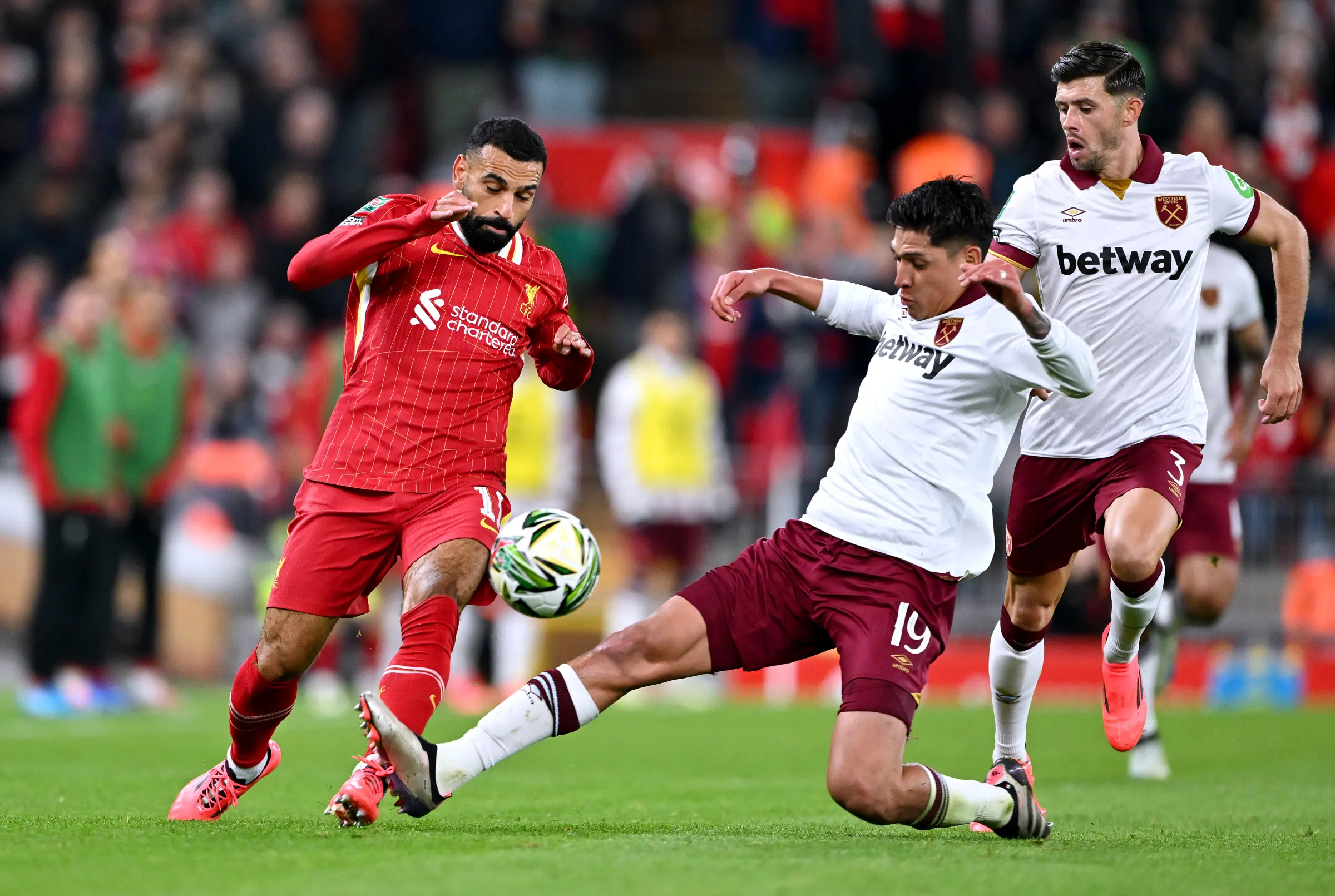
The West Ham Vs Liverpool F.C. standings and timeline are closely monitored by fans of these two EPL clubs.
West Ham United and Liverpool F.C. have shared a long-standing relationship within English football, one shaped less by traditional rivalry and more by contrasting histories, ambitions, and periods of dominance.
Their meetings span more than a century, cutting across different eras of the league system, managerial philosophies, and club fortunes.
While Liverpool have largely competed at the top end of the English game, West Ham’s story has been defined by resilience, survival, and occasional challenges to the established order.
Early Timeline And Pre-War Encounters
West Ham and Liverpool first met in league competition in the early 20th century, during a formative period for professional football in England.
Liverpool quickly established themselves as a major force, winning league titles in the 1900s and 1920s.
West Ham, meanwhile, developed a reputation as a competitive but inconsistent side, often moving between divisions.
Early encounters tended to reflect this imbalance, with Liverpool frequently holding the upper hand, particularly at Anfield.
However, West Ham’s physical style and strong home support at the Boleyn Ground often made fixtures in East London more challenging for the Merseyside club.
Key themes from the early era include:
Liverpool’s growing league dominance
West Ham’s reliance on home advantage
Competitive but uneven head-to-head records
Post-War Period And West Ham’s Golden Generation
The post-war decades saw West Ham rise in stature, particularly during the 1950s and 1960s.
Under managers such as Ted Fenton and Ron Greenwood, the club became known for its attractive passing style and production of elite talent.
This era produced players who would go on to shape English football, narrowing the gap between West Ham and traditional giants like Liverpool.
Liverpool, however, underwent their own transformation in the late 1950s and 1960s under Bill Shankly, laying the foundations for sustained dominance.
Matches between the two sides became more tactically sophisticated, with West Ham capable of matching Liverpool for spells but often lacking the depth to sustain long-term success.
Notable features of this period include:
West Ham’s technical identity taking shape
Liverpool’s transition into a modern powerhouse
Closely fought league encounters
The 1970s And 1980s: Liverpool’s Era Of Supremacy
The 1970s and 1980s firmly tilted the balance toward Liverpool.
During this period, Liverpool became the dominant force in English and European football, regularly winning league titles and continental honours.
West Ham, while competitive, often found themselves battling in mid-table or facing relegation threats.
Meetings during these decades frequently highlighted the gulf in squad depth and consistency.
Even when West Ham produced strong performances, Liverpool’s experience and efficiency often proved decisive.
Despite this, West Ham still managed memorable results, particularly in cup competitions, reinforcing their reputation as a side capable of upsetting stronger opponents on their day.
Key patterns from this era include:
Liverpool’s control of most league fixtures
West Ham’s occasional standout performances
A widening gap in long-term success
Premier League Era And Changing Dynamics
The formation of the Premier League in 1992 brought renewed attention to fixtures between West Ham and Liverpool.
Liverpool entered the new era as an established giant but experienced a relative decline compared to their dominance of previous decades.
West Ham, meanwhile, fluctuated between mid-table stability and relegation battles, often rebuilding squads under new managers.
This era produced a number of entertaining encounters, with West Ham occasionally frustrating Liverpool through disciplined defending and counter-attacking football.
Liverpool generally maintained the upper hand, but results were no longer as predictable as in earlier decades.
Themes that defined this period include:
Liverpool’s pursuit of renewed dominance
West Ham’s inconsistent league status
Increased competitiveness in head-to-head matches
2000s And 2010s: Diverging Ambitions
The 2000s and 2010s further highlighted the contrasting trajectories of the two clubs.
Liverpool re-established themselves as regular Champions League contenders, winning major trophies and attracting elite talent.
West Ham continued to experience cycles of promotion, relegation, and rebuilding, often prioritising league survival.
Despite this, West Ham produced several notable performances against Liverpool, particularly at home, where atmosphere and intensity played a major role.
These matches often carried symbolic weight, representing West Ham’s attempts to challenge the established elite.
Key developments during this era include:
Liverpool’s return to the top tier of European competition
West Ham’s focus on consolidation
Occasional high-profile upsets
Current Standings And 2025 Season Context
In the current Premier League standings, Liverpool sit fourth after 20 matches.
They have recorded 10 wins, four draws, and six losses, scoring 32 goals and conceding 28, leaving them with a goal difference of plus four and 34 points.
Liverpool’s recent form has been steady, with three wins and two draws in their last five matches.
West Ham, by contrast, find themselves in 18th place after 21 matches.
They have won just three games, drawn five, and lost 13, scoring 22 goals while conceding 43.
This leaves them with a goal difference of minus 21 and just 14 points, placing them firmly in the relegation zone.
Standings snapshot:
Liverpool: 4th place, 34 points, European qualification push
West Ham: 18th place, 14 points, relegation battle
Significant gap in form, depth, and consistency
What The Fixture Represents Today
West Ham vs Liverpool now reflects two clubs with very different short-term objectives.
Liverpool are focused on securing European football and maintaining pressure on the teams above them.
West Ham are battling for survival, with every point crucial in their attempt to climb out of the relegation zone.
Despite the disparity in league position, matches between the two remain unpredictable, often influenced by atmosphere, momentum, and tactical choices.
West Ham’s urgency and physicality can still test Liverpool, while Liverpool’s quality and experience usually shape the outcome over ninety minutes.
About the Author
