
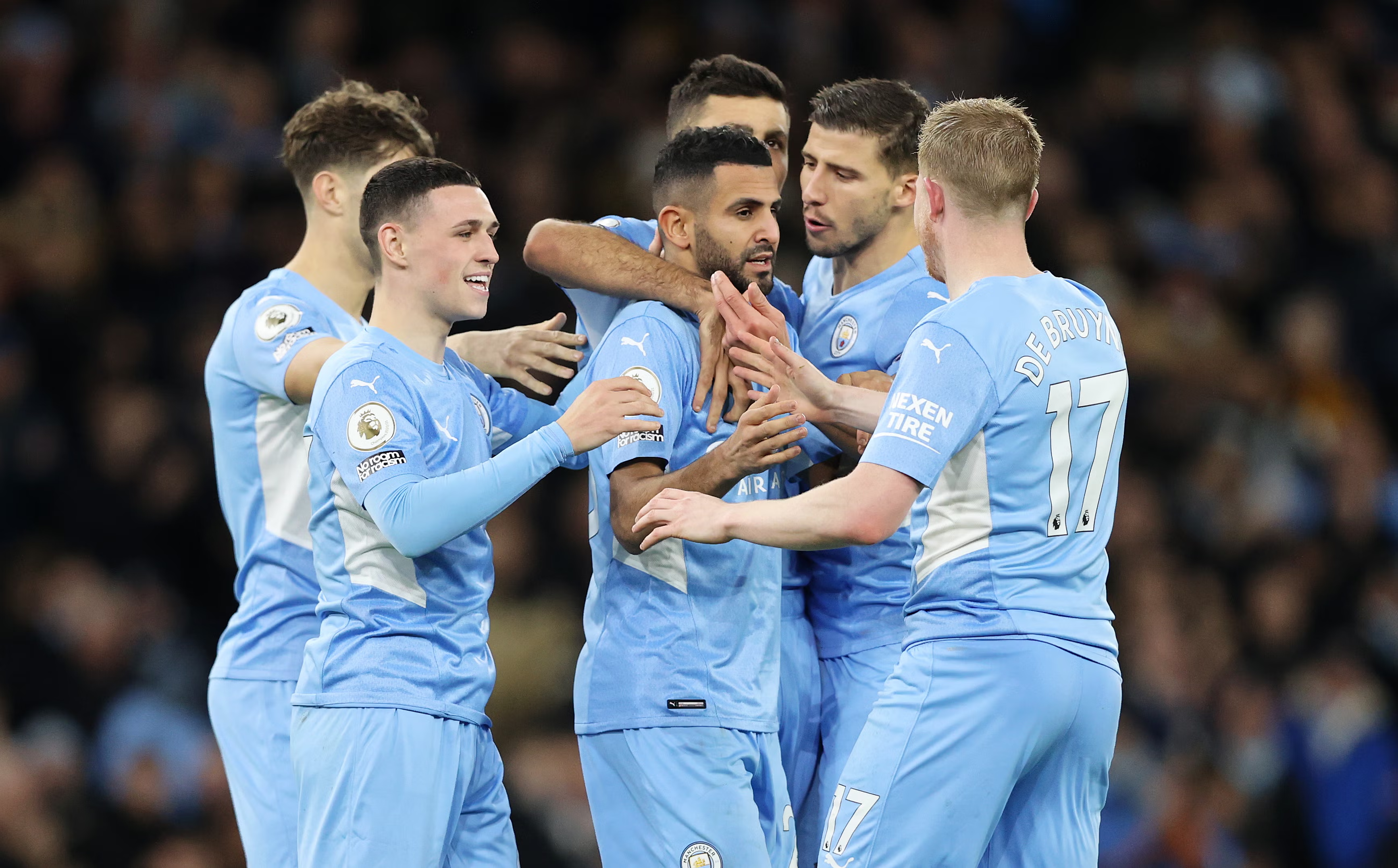
The timeline of the Manchester City Vs Leeds United rivalry dates back to the early 20th century.
The rivalry between Manchester City and Leeds United is not one defined by constant proximity at the top of English football, but by sharp contrasts in identity, eras of dominance, and memorable flashpoints that have punctuated more than a century of competition.
While the two clubs have often existed in different divisions, their meetings have repeatedly carried historical weight, shaped by shifting power dynamics, regional pride, and moments that still resonate with supporters today.
Early Meetings And Pre-War Foundations
Manchester City and Leeds United first crossed paths in the early 20th century, with fixtures taking place primarily in the First Division and later the Second Division.
In these formative years, neither side held sustained dominance over the other, with results tending to swing based on squad quality rather than rivalry intensity.
City were already established as a competitive force, while Leeds were still building their identity after being formed in 1919 following the disbandment of Leeds City.
Matches in the 1920s and 1930s were often physical, reflecting the style of the era, but rarely carried national significance beyond league positioning.
Key characteristics of the early period included:
- Frequent league encounters across multiple divisions
- Narrow scorelines and defensive contests
- Little media attention compared to modern standards
The Don Revie Era And A Shift In Power
The rivalry took on greater meaning during the 1960s and early 1970s, coinciding with Don Revie’s transformation of Leeds United into one of England’s most formidable sides.
Leeds became regular title contenders, while Manchester City also enjoyed success, winning the league in 1968 and collecting major domestic honours.
During this period, head-to-head meetings were fiercely contested, with both clubs often challenging for honours at the same time.
Leeds’ reputation for discipline and intensity contrasted with City’s more expressive attacking play, creating stylistic clashes that drew wider attention.
Notable aspects of this era included:
- High-stakes league matches influencing title races
- Increased physicality and tactical battles
- A more even head-to-head record than in later decades
Decline, Separation, And Reduced Encounters
From the late 1970s through the 1990s, Manchester City and Leeds United began to drift apart competitively, often finding themselves in different divisions.
Leeds enjoyed a resurgence under Howard Wilkinson, winning the First Division title in 1992, while City struggled with instability and relegations.
As a result, meetings became less frequent, reducing the rivalry’s visibility and intensity.
When the clubs did meet, fixtures were often shaped by contrasting objectives, such as promotion pushes versus relegation battles, rather than shared ambitions at the top.
Key trends from this period:
- Long gaps between league meetings
- Shifting dominance based on divisional status
- Reduced national focus on the fixture
Premier League Era And Renewed Contrast
The modern Premier League era has redefined the Manchester City vs Leeds United dynamic, particularly following City’s transformation into a global powerhouse after 2008.
Leeds’ return to the Premier League in 2020 reintroduced the fixture to the top flight, but with a significant imbalance in resources and squad depth.
City’s possession-based dominance under Pep Guardiola contrasted sharply with Leeds’ high-intensity pressing approach under Marcelo Bielsa.
Several matches during this period stood out for their tactical intrigue and unexpected outcomes, including Leeds securing results against the odds despite City’s overwhelming control of possession.
Features of recent Premier League meetings include:
- Clear disparity in financial power
- Tactical contrast rather than historical animosity
- Occasional surprise results amid City dominance
Head-To-Head Record Overview
Across all competitions, Manchester City hold the overall edge in the head-to-head record, particularly driven by strong runs in the modern era.
Leeds United enjoyed periods of superiority during the mid-20th century, but City’s consistency in recent decades has tilted the balance.
League encounters make up the majority of meetings, with cup ties being relatively rare and often separated by long intervals.
General head-to-head patterns show City scoring more freely in recent years, while Leeds’ victories are more evenly spread across earlier eras.
Key head-to-head observations:
- Manchester City lead overall in wins
- Leeds’ strongest period came during the 1960s and early 1970s
- Goal margins have increased in City’s favour since 2010
Memorable Matches And Turning Points
Several fixtures between the two sides have left a lasting impression, even if the rivalry lacks the frequency of traditional derbies.
One of the most discussed modern matches saw Leeds secure an away victory despite playing with ten men, highlighting their resilience and tactical discipline.
Earlier decades produced tight, combative encounters that reflected the broader competitive landscape of English football at the time.
These moments have contributed to the fixture’s reputation as unpredictable, particularly when Leeds approach matches as underdogs.
Recurring themes from notable matches include:
- Underdog performances from Leeds
- Tactical battles rather than emotional flashpoints
- Occasional shocks despite historical trends
Rivalry Context And Fan Perspectives
For Manchester City supporters, Leeds United are not viewed as a primary rival, with local derbies and title challengers carrying greater significance.
Leeds fans, however, often approach the fixture with heightened intensity, rooted in historical clashes and regional pride against a club that now represents modern football’s elite.
This asymmetry in perception has shaped the rivalry’s tone, making it more situational than constant.
The fixture tends to gain importance when league positions, survival, or symbolic victories are at stake rather than due to longstanding hostility.
Fan-driven elements of the rivalry include:
- Differing expectations based on club status
- Historical memory playing a larger role for Leeds
- Modern relevance driven by league context
How The Rivalry Is Viewed Today
In the current football landscape, Manchester City vs Leeds United is seen more as a contrast of philosophies and eras than a traditional rivalry.
City’s sustained success has reframed meetings as tests of professionalism and control, while Leeds often treat the fixture as an opportunity to challenge hierarchy.
The head-to-head history provides context rather than tension, with modern matches defined more by tactical narratives than emotional ones.
As long as both clubs share the same division, the fixture retains relevance, driven by history, style, and the occasional reminder that past rivalries can still produce compelling football stories.
About the Author
