
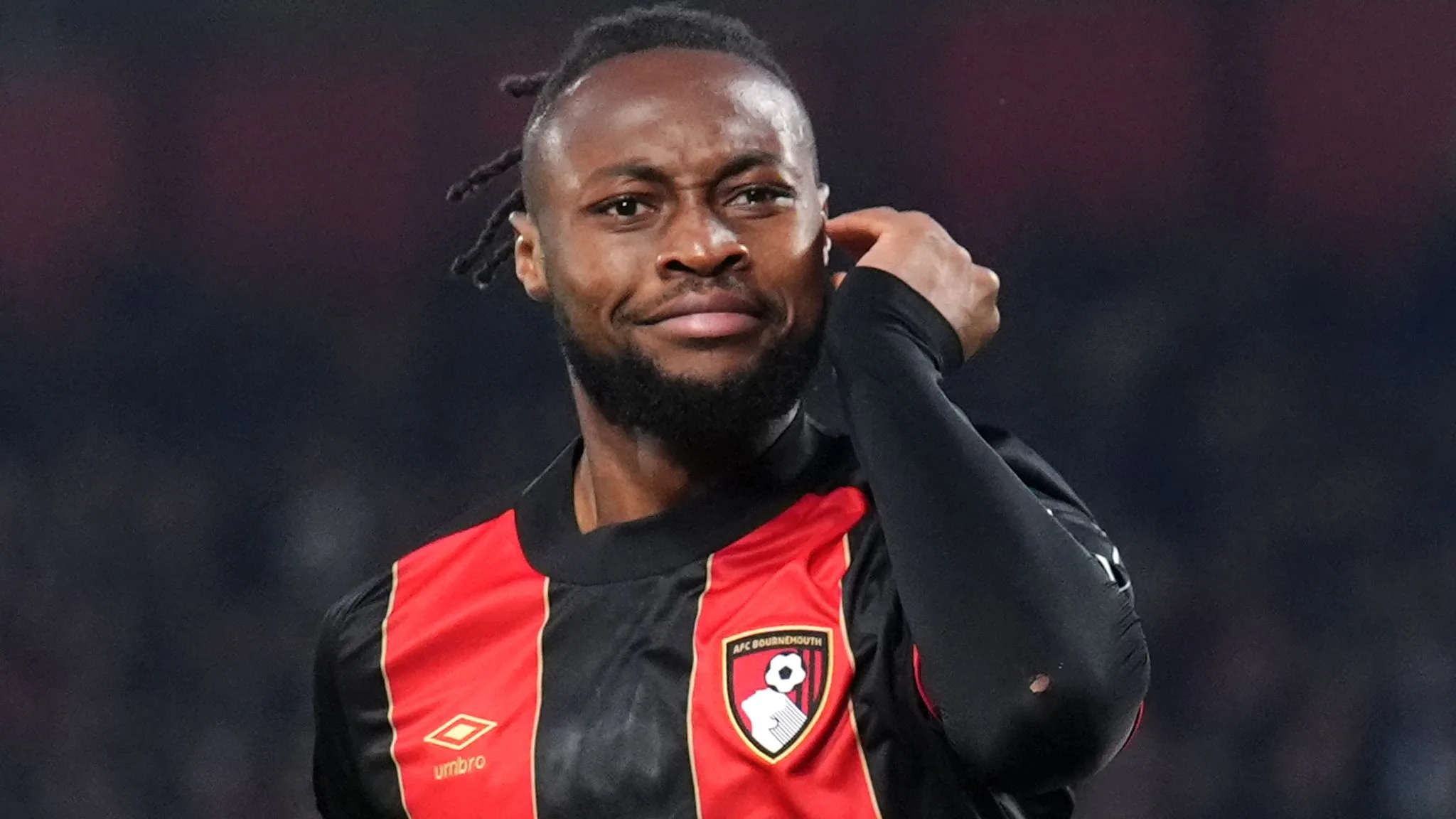
Manchester City have confirmed they are offering Antoine Semenyo full support after the Ghanaian forward revealed a second incident of racist online abuse this season.
The 26-year-old posted a screenshot to his Instagram story with the caption “It’s started again,” exposing a comment containing racial slurs directed at him following City’s 3-0 win over Chelsea at Stamford Bridge last Sunday.
The Premier League responded swiftly with an official statement, which read: “We are appalled at the unacceptable online racist abuse targeted at Antoine Semenyo and have offered our support to the player and club. Racism has no place in our game or anywhere in society. It is clear that more needs to be done to address this issue and we will work alongside clubs, football bodies, law enforcement and social media companies to ensure this remains a priority for all.
Any individuals identified and found guilty of discrimination will face the strongest possible consequences, including custodial sentences, football banning orders and criminal records.”
The FA echoed those sentiments, using identical language in a separate statement. The governing body’s response acknowledged that a problem continues to persist despite years of awareness campaigns, mandatory reporting mechanisms and increased coordination with law enforcement agencies. The language of the two statements, while firm, reflects an institutional recognition that existing tools have not closed the gap between aspiration and reality.
This is the second time Semenyo has been targeted this season. The first incident occurred during his time at Bournemouth, when a spectator at Anfield racially abused him during the opening-day fixture against Liverpool. Referee Anthony Taylor halted play at the time. Merseyside Police subsequently arrested and charged 47-year-old Mark Mogan with a racially aggravated public order offence, which Mogan denied at Liverpool Magistrates’ Court in December. His trial is scheduled to begin on April 22.
Semenyo joined City from Bournemouth for £64 million in January and has integrated into Guardiola’s squad with considerable success. He has scored 15 Premier League goals between his two clubs this season, is widely expected to feature in Ghana’s 2026 World Cup squad, and has won the Carabao Cup since arriving at the Etihad. His performances have added attacking dimensions to a City side that relied heavily on Erling Haaland for goals in the first half of the campaign.
The abuse arrived on the back of a celebratory Instagram post after the Chelsea win, which made the targeting more pointed. That combination of visible joy and immediate targeting highlights the specific ugliness of social media abuse directed at footballers: it turns moments of professional success into vectors for discrimination. City teammates and the broader football community responded online with visible solidarity.
Racism in online environments has proven resistant to the measures introduced in recent years. Anonymous accounts, cross-platform migration and the speed of social media communication continue to outpace enforcement mechanisms that depend on identification and prosecution. The Premier League’s commitment to work with social media companies remains in place, but the structural incentives of platforms built on engagement have never aligned comfortably with the goal of eliminating abuse.
For Semenyo specifically, facing this situation twice in a single season underlines the burden carried by Black players in English football that their white counterparts do not face as a matter of routine. His decision to share the abuse publicly rather than absorb it privately is a continuation of a strategy some players have adopted to make the problem visible and maintain pressure on platforms and authorities.
About the Author
